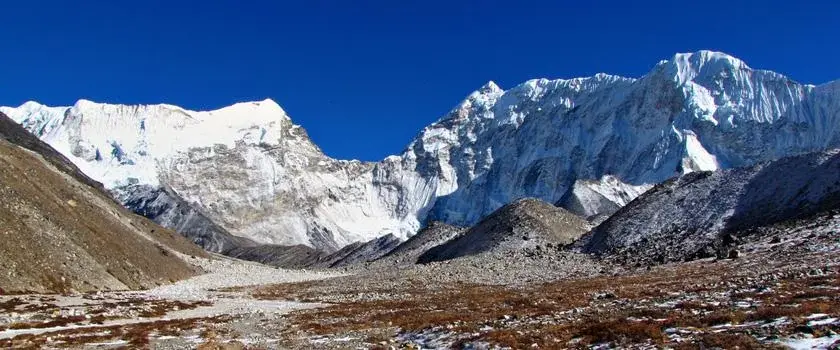
 Peak climbing
Baruntse Expedition
Plan a Baruntse expedition with the original mountain programme and support arrangements in the Himalayas.
AdventureGuide USD 39,999
Peak climbing / Nepal
Plan a guided Mera Peak climbing journey, combining the approach trek with the expedition arrangements described in the programme.
THE EXPERIENCE
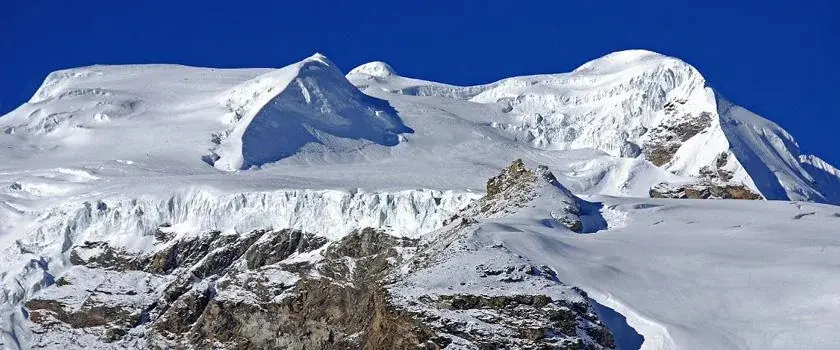
Mera peak is really famous and higher trekking Peak in Nepal.Adventure Pilgrims Trekkinghas experience climbing sherpas who will take you to the amazing environment of the Mera peak .
The Mera Peak Climbing (6476m) is famed for the being the biggest trekking peak in Nepal, though there is little technical difficulty required to climb. Mera Peak rises to the South of Everest and dominates the beautiful and remote valleys of Hinku and Hongu. The ascent of Mera Peak is made from the Mera La pass (5415m) on the Northern Face, which connects the unpopulated valley of Hongu to the Hinku valley. Late Jimmy Roberts and Sen Tensing were the first climbers to do the Mera Peak Trek, following this very route on 20th May 1953. The Mera Peak Trek begins in Lukla (after a short flight from Kathmandu). From Lukla ,six days of trekking will see you through fascinating Sherpa Villages to Mera Base Camp (5099m) situated at the base of an immense glacier leading to the Mera La Pass.
As the ascent of Mera Peak continues two more High Base Camps are set up at 5385m (a little below Mera La) and a higher one at 5800m, from where the summit ascent can be attempted. Mera Peak has two distinct summits, the main one being the Northern Summit (6476m), which is reached by skirting the Central Summit (6461m) and following a classic snow ridge to the top. Even though the Mera Peak climb is technically straightforward, there are some crevasses to maneuver around, and the route can be long and demanding after a fresh snowfall. The climb from Mera La to the Summit is gradual with an outstanding mountain panorama of the Eastern Nepal Himalayas always in sight. The peaks visible include Mt. Everest (8848m), Cho-Oyu (8201m), Lhotse (8516m), Makalu (8463m), Kangchenjunga (8586m), Nuptse (7855m) and Chamlang (7319m) amongst many others.
ONE DAY AT A TIME
A guide to the days ahead. Your team will confirm the route, pace and arrangements with your written itinerary. Mountain weather and local conditions can change the plan.
we take the short but spectacular flight to Lukla where we meet our crew. We then begin walking for 3 to 4 hours due east from Lukla, passing through a number of tiny hamlets before entering thick forest on the hillside below the Kalo Himal Ridge . Be careful to stay with the group on this section as there are many trails leading away from the main path. There are many streams all of which are loosely referred to as Chutanga .Stay overnight at lodge.
.You trek steeply ascending path to cross Zatrawala Pass . From here you can enjoy the spectacular views of Numbur Himal, Kongdi Ri, Karyolang peak and many other mountains and peaks. Now you walk along the leveled trail for almost one and half hours and then the trail turns downhill and you trek through this descent path all the way to Zatrabok . This path is surrounded by hills.Stay overnight at lodge.
To reach Kothe you trek steep descent path all the way. En route, you pass forests of juniper, rhododendron and other local vegetation . The views you can enjoy are of Mera peak, Nauleku peak and many other mountains and peaks.Stay overnight at lodge.
You trek along the bank of the river and find bushes on both sides. The trek reaches Sabal Tsho-Lake following Hinku Valley (4600m.). The path is a gradual ascent and you can enjoy the views of Kusum Kanguru peak and many more.Stay overnight at lodge.
Today is an acclimatization Day at Tangnag . This will be a rest day to let your bodies recover from the past days of hiking. You will relax and soak up the beautiful views of peaks and glaciers surrounding the head of the Hinku Valley .Stay overnight at lodge.
You now walk towards the mountain as the trail swings to the east. You gradually gain height until you find yourself at Dig Kharka (4,650m) , close to the foot of the Hinku Nup Glacier. This is a pleasant, grassy camp in an impressive location.Stay overnight at lodge.
Today we will climb above 5,000 m. for the first time. Our hike up to Khare (5,100m, 16,728ft ) is short, but we will take it slowly, with frequent stops to soak up the incredible surroundings. The trail heads eastward out of Tangnag along with the lateral moraine of the Dig Glacier . You will pause to climb up the moraine for a view of the p ristine Sabai Tso glacial lake. A drop in lake level, caused by a recent rupture of the natural dam the held the lake, is clearly visible. You will arrive at Khare in the early afternoon and have lunch. From Khare , the beautiful north face of Mera Peak is in plain view and Mera glacier spills steeply down into the valley.Stay overnight at lodge.
This is an acclimatization day as you can prepare yourself for the Mera Peak climb. Stay overnight at lodge.
Today you will travel a short distance, slowly ascending up onto Mera glacier . The climb is initially steep, but flattens out as you reach the crest of the glacier. You will traverse a long flat path on top of the glacier as you make your way to the pass, called Mera La (5,400m, 17,710ft). From here, the views are stunning. Crevasse fields gently stretch out in front of the pass and you are literally enclosed by a ring of jagged peaks and blue-green glaciers. The remaining route up to the summit of Mera Peak is clearly visible. Camp overnight.
This day you trek a gradually ascending path all the way. This area is covered by ice glacier . The views make you speechless as you enjoy Everest, Makalu, Baruntse, Kusum Kanguru and many other mountains and peaks in panorama. Moreover you feel chilled by the magnificent views of Mera Glacier. Camp overnight.
Today, you make the climb to the high camp . This is located at about 5,800 metres on the Northern slopes of the upper mountain. It provides an excellent launch pad for the final climb to the summit. There is no need to make an early start but you must get your equipment ready so that the Sherpas can help with carrying this and the camp stores to the high camp . Having gained the Mera La , the route turns left (south) and follows easy angled snow slopes. After a short distance an area of crevasses is reached. Under normal conditions these can be walked around very easily, although looking into their deep, dark depths is always impressive. The crevasses soon give way to slightly steeper but open snow slopes that lead without difficulty to the high camp. This camp is in an excellent setting with wonderful views of Everest, Makalu and the Nuptse, Lhotse wall directly ahead. The setting sun casts an unbelievably magic light on these awesome mountains.Camp overnight.
The climb to the summit of Mera starts gradually and much will depend on snow and general weather conditions. The central summit will soon appear above the head of a wide glacier flanked by two ridges. We climb the centre of this over open snowfields and avoiding crevasses. The route then swings south-east, skirting below and to the east of the left-hand ridge before turning back right towards the main summit ridge of Mera. Mera actually has three summits ; the highest is our objective. We reach this by following a classic snow-ridge to just below the final wall that guards the top. This short steep snow slope is easily climbed but there is a big effort required to climb this l ast 50 meters. Your reward, however, is a feeling of ecstatic jubilation as you survey the magnificent panorama from the top. After taking pictures and enjoying the view, we descend by the same route back to our campsite below the Mera La. Stay overnight at lodge.
t takes about eight hours. This day you walk along the gradual descending path passing through Tangnang. This is a small village and you find yak settlement here. To reach Kothe you follow the same kind of path. On the way you pass forests covered with fir, rhododendron and local vegetation.Stay overnight at lodge.
It takes about six hours. The trail goes steeply up all the way to Zatrabok . On the way you pass forests and green hills.Stay overnight at lodge.
It takes approximately five hours.Till Zatrawala Pass the trail is ascending and then your trek begins to descend until you reach Chutanga. This route is a rocky path.Stay overnight at lodge.
It takes about four hours. You trek through forests of fir, rhododendron, oak, juniper and local vegetation . The trail you walk along moves downhill all the way to Lukla . You can enjoy the views of Numbur Himal, Kongdi Ri, Karyolang peak and many other mountains and peaks.Stay overnight at lodge.
I t takes about 35 minutes.
These details come from the existing itinerary and are subject to confirmation in your written quote. Review our booking terms before making a commitment.
KEEP YOUR OPTIONS OPEN
Peak climbingPlan a Baruntse expedition with the original mountain programme and support arrangements in the Himalayas.
 Peak climbing
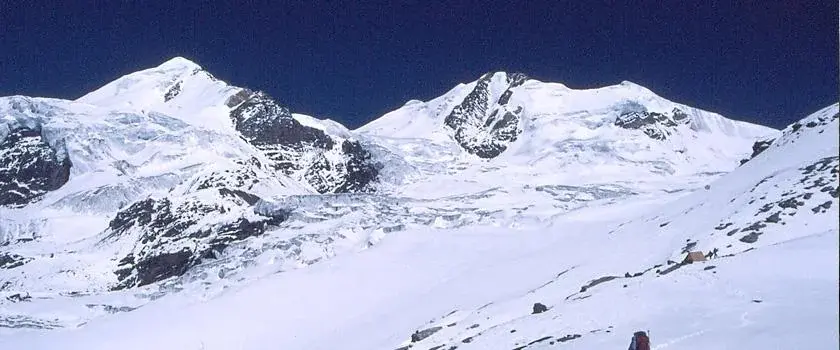
Explore the Chulu climbing programme in the Annapurna region, with trekking and expedition arrangements for the journey.
 Peak climbing
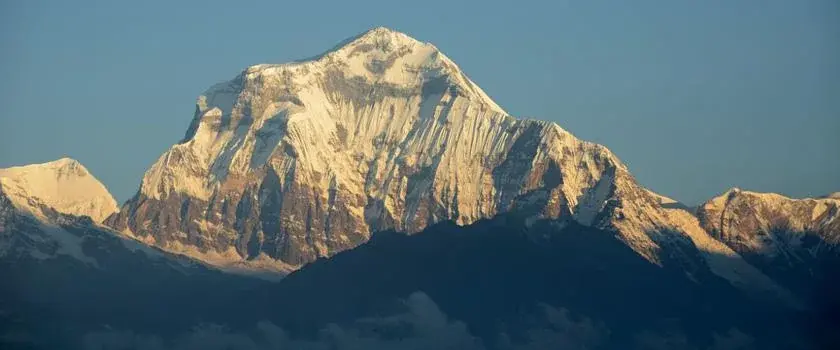
Explore the Dhaulagiri expedition programme, including the approach and support arrangements for a Himalayan climbing journey.